Add a video
Chapter 2
Effective inclusive education moves beyond traditional "school-centric" models—where families are passive recipients of institutional mandates—and adopts a Family-Centered Practice (FCP) paradigm. Grounded in Bronfenbrenner’s Ecological Systems Theory, the student’s developmental trajectory is dictated by the strength and bi-directional quality of the interactions within their microsystem (the immediate home and classroom environments) and the mesosystem (the intersection where home and school meet).
When systemic barriers fracture mesosystem communication, the learner experiences cognitive and emotional dissonance. To mitigate this, educators must integrate Moll’s "Funds of Knowledge" framework, recognizing that every household possesses historically accumulated and culturally developed bodies of knowledge and skills. Rather than viewing non-traditional home environments through a deficit lens, inclusive educators treat home practices as intellectual capital essential for individualizing instruction.
While basic diagnostic questions establish eligibility, an advanced diagnostic intake interrogates the operational realities of the student's daily life across multiple domains.
Diagnostic Reality vs. Functional Impact: Etiological diagnoses (e.g., Autism Spectrum Disorder Level 2, Developmental Coordination Disorder) specify categories, but they do not dictate functional capacity. Educators must assess the variance between a formal clinical diagnosis and the student’s dynamic daily presentation.
Co-Occurring Conditions: Explicitly investigate internalizing comorbidities (e.g., pediatric anxiety, sensory processing dysregulation) that are frequently masked in structured clinical evaluations.
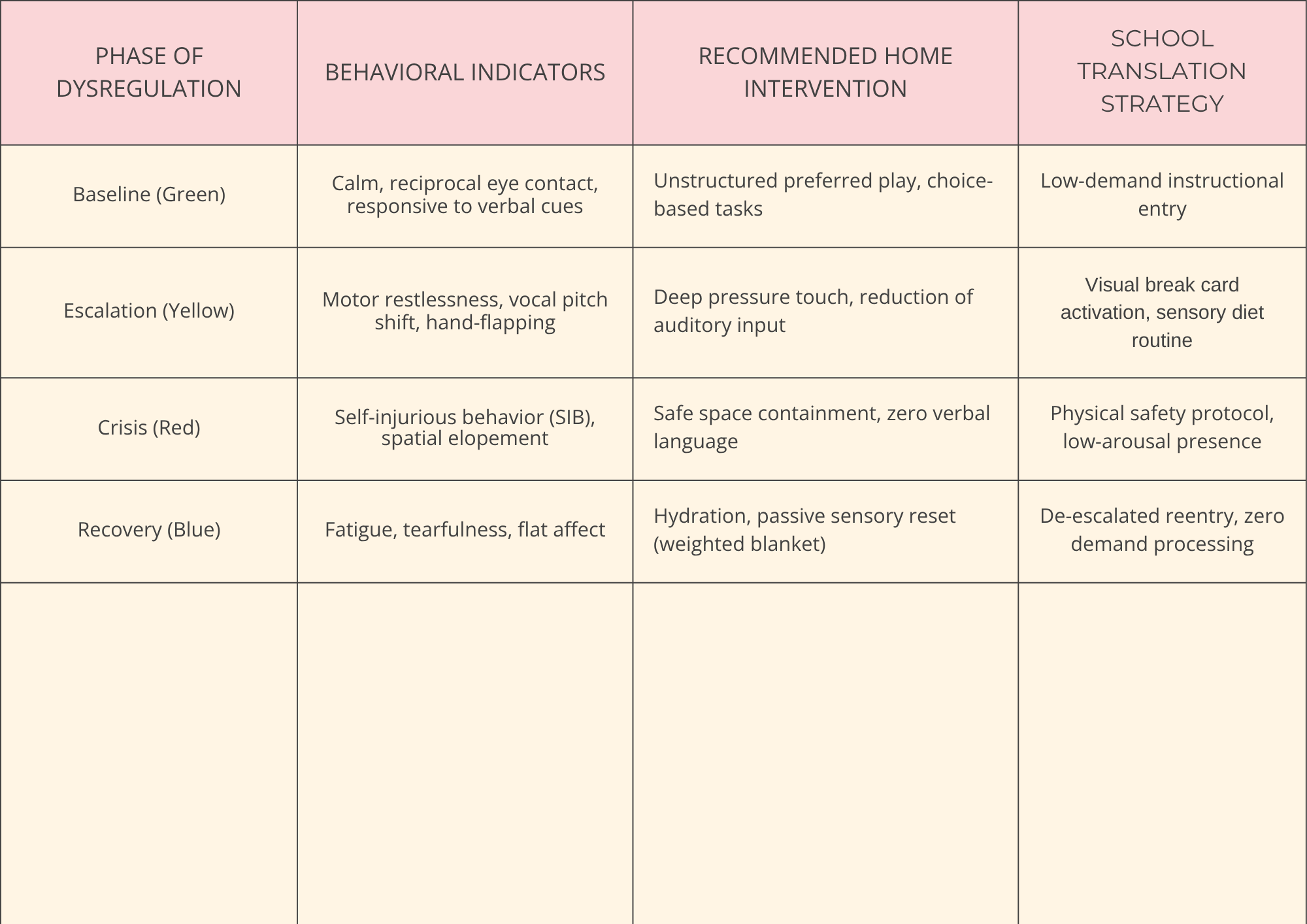
Setting Events vs. Immediate Triggers: Distinguish between antecedents (immediate sensory or task-based prompts) and setting events (e.g., poor sleep hygiene, gastrointestinal discomfort, medication titrations) that lower the threshold for dysregulation.
Topography of Meltdowns: Map the precise physiological and behavioral progression of dysregulation—from early warning signs (e.g., motor vocal tics, peripheral gaze avoidance) to peak crisis behaviors and post-ictal exhaustion.
Hyposensitivity vs. Hypersensitivity: Catalog sensory preferences across tactile, vestibular, proprioceptive, auditory, visual, olfactory, and interoceptive domains.
Environmental Generalization: Identify home-based environmental accommodations (e.g., dimmable LED lighting, ambient white noise, specific seating postures) that can be replicated within the classroom setting to lower cognitive load.
Building sustained engagement requires diagnosing why families disengage. Disengagement is rarely indifference; it is typically an adaptive defense mechanism against institutional trauma or structural marginalization.
Institutional Betrayal Trauma: Many parents of neurodivergent or disabled children have endured years of systemic friction, invalidation, or punitive disciplinary actions from educational institutions. Re-establishing trust requires a shift from compliance-based interactions to collaborative inquiry.
Linguistic and Cultural Reciprocity: Standard translation services often fail to convey nuanced educational jargon (e.g., IEP accommodations, informal assessment terms). Inclusive practices demand culturally sensitive, plain-language communication that honors linguistic diversity without simplifying the underlying pedagogical intent.
Socioeconomic Friction: Traditional parental involvement models assume flexible schedules and accessible transportation. Inclusive practices require asynchronous engagement mechanisms that accommodate non-standard work hours and systemic resource constraints.
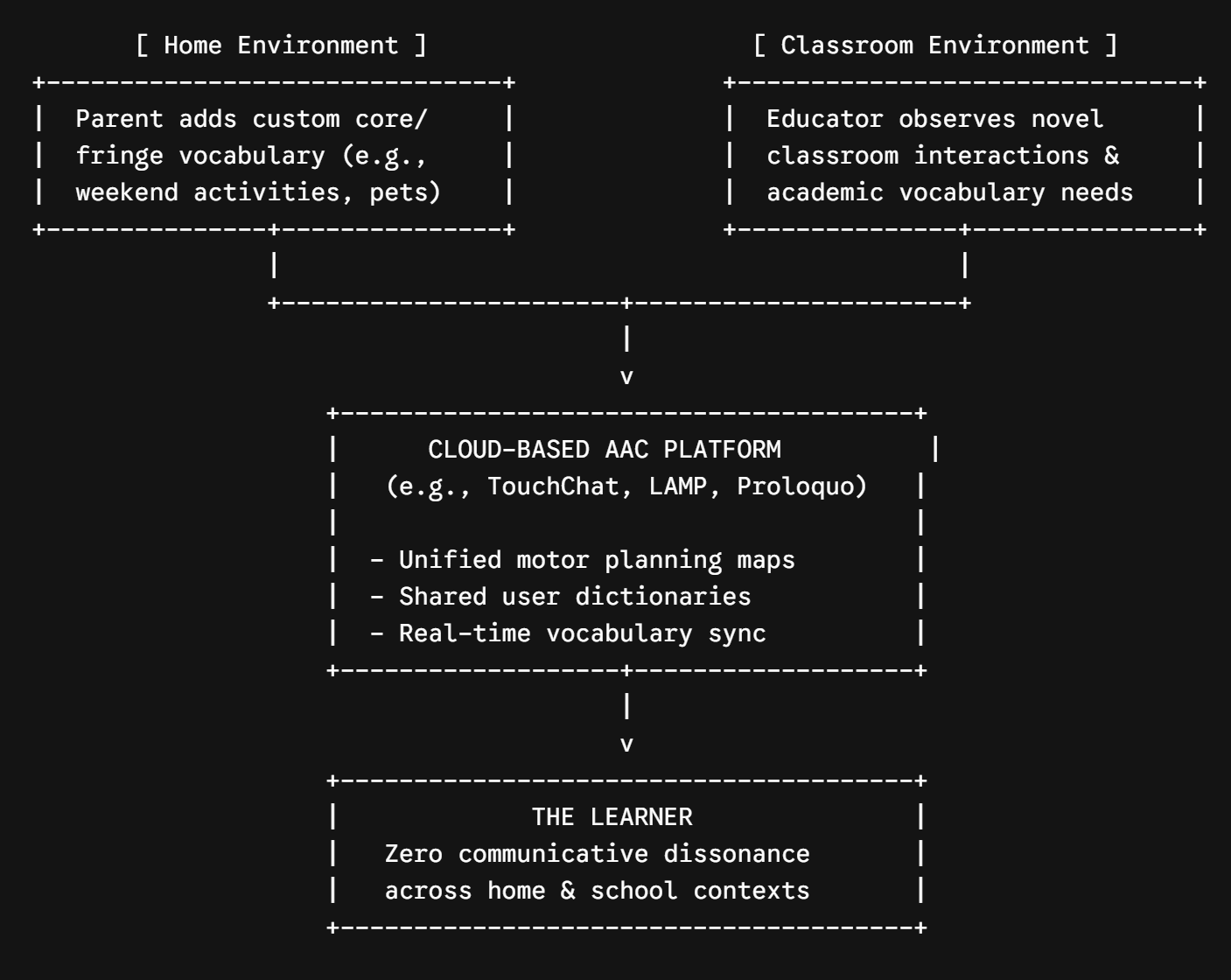
The integration of Augmentative and Alternative Communication (AAC) devices and cloud-based educational technologies requires continuous synchronization across settings to prevent communicational regression.
Motor Planning Consistency: Switching between disparate communication boards disrupts motor memory, creating high cognitive friction for non-speaking students. Cloud-assisted platforms ensure that visual icon placement, page layouts, and vocabulary organization remain consistent regardless of device location.
Vocabulary Expansion Protocols: Establish clear rules for updating core (high-frequency) and fringe (context-specific) vocabulary. Parents must be empowered to introduce contextual terms (e.g., names of relatives, preferred home items) without disrupting the underlying motor planning architecture configured by speech-language pathologists (SLPs).
Data Privacy and Ethical Telemetry: When leveraging cloud-synced technologies across public and private spheres, educators must maintain compliance with federal privacy mandates (FERPA and COPPA), ensuring sensitive student behavioral data and communication logs remain securely encrypted and accessible only to authorized educational team members.