Teaching Inclusion: A Classroom Guide to Equity and Empathy
1. Equality vs. Equity: The "Glasses" Analogy
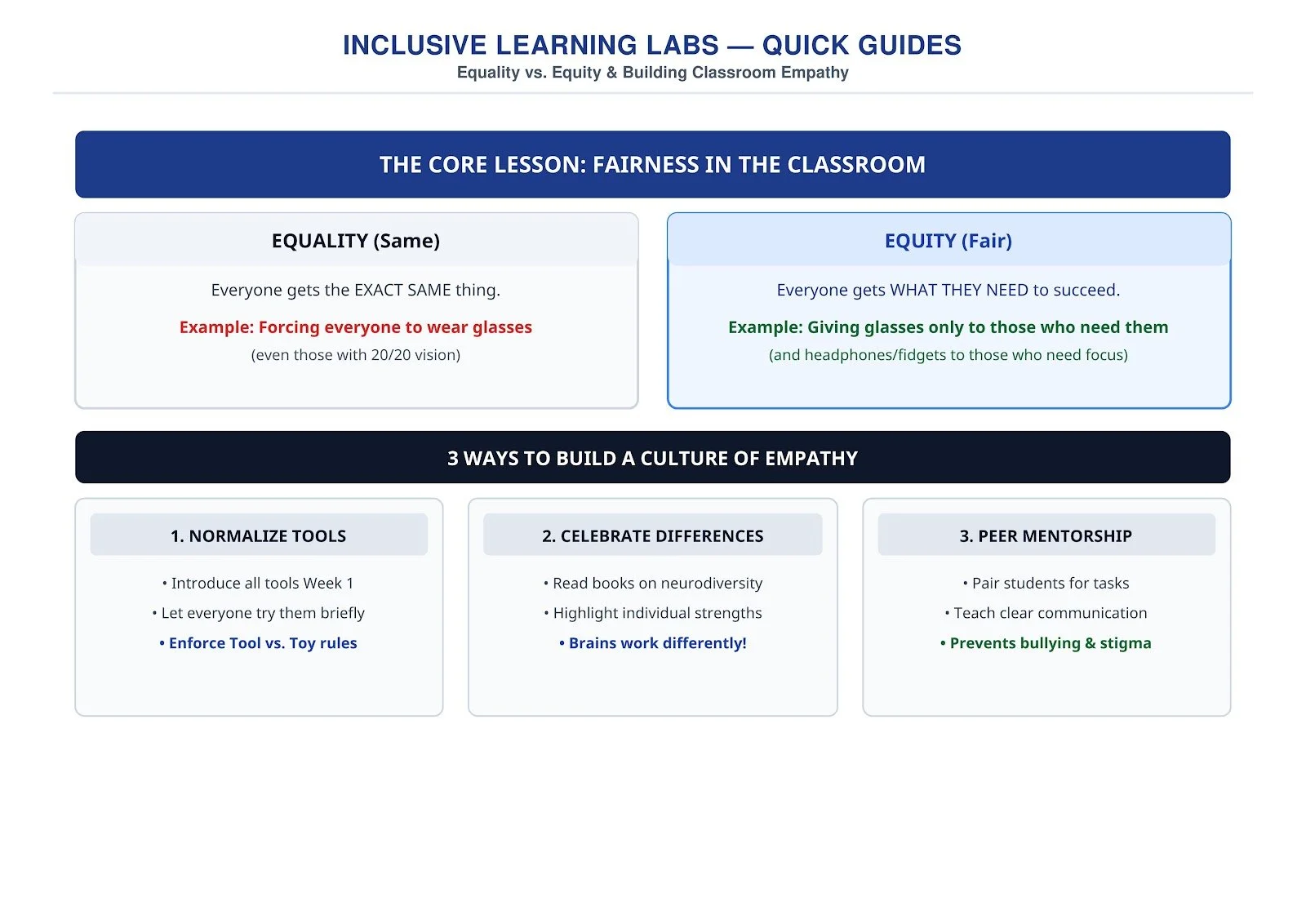
Children have a deep, built-in sense of fairness. However, they often mistake fairness for everyone getting the exact same thing (Equality). When a classmate gets to use a fidget, sit on a wobble stool, or wear headphones, other students might ask, "Why do they get that and I don't?"
The easiest and most effective way to explain accommodations is through the Glasses Analogy.
The Script for Students:
"If one person in our classroom needs glasses to read the board, would it make sense to force everyone in the class to wear glasses? No, that would make it harder for most of you to see!
Would it be fair to take away that student's glasses just because nobody else has them? Of course not!
Just like some people need glasses for their eyes to see clearly, some of our classmates need noise-canceling headphones, fidget tools, or special seating to help their brains focus. Fair doesn't mean everyone gets the exact same thing. Fair means everyone gets exactly what they need to do their best.
2. Building a Culture of Empathy and Acceptance
Understanding equity is just the first step. To build an inclusive classroom where every child feels safe, educators must actively model and teach empathy.
A. Normalize Tools on Day One
Do not wait for a student to use a tool to explain it to the class. Curiosity is natural, but secrecy breeds stigma.
Show-and-Tell for Classroom Tools: During the first week of school, introduce all classroom sensory items (like chair bands, body socks, or noise-canceling headphones) to the whole class.
Let Everyone Try Them Briefly: Allow all students to see and touch the items so the novelty wears off.
Set Firm Boundaries: Clearly define the difference between a tool and a toy.
B. Celebrate Differences & Read Neurodiversity-Affirming Books
Children handle differences best when they are openly discussed rather than ignored. Make neurodiversity a normal, positive topic in your daily instruction.
Read Inclusive Books: Read stories featuring neurodivergent characters, nonspeaking students, or children with physical disabilities.
Highlight Unique Strengths: Emphasize that brains are like thumbprints—no two work exactly the same way. Normalize that some brains are great at math, some are great at art, and some need extra time or specific tools to process information.
C. Encourage Peer Mentorship & Collaboration
Bullying and exclusion often happen simply because kids don't know how to interact with peers who communicate or act differently.
Pair Up for Success: Partner neurotypical students with neurodivergent peers during group activities, art projects, or recess games.
Teach Explicit Communication Skills: Show students how to interact kindly and clearly with peers who may be nonspeaking, use communication boards (AAC), or need extra personal space.
Focus on Shared Interests: Help peers find common ground (e.g., "Did you know you both love building with LEGOs?"). When classmates see each other as friends rather than projects, it creates a protective, supportive community.
Equality vs. Equity Quick Reference Guide